BG
BG DE
DE Hrvatski
 Čeština
 Dansk
Dansk Nederlands
 Eesti
Eesti Suomi
Suomi Français
 Ελληνικά
 Magyar
 Latviešu
 Lietuvių
 Malti
Malti Norsk bokmål
 Polski
 Română
 Slovenčina
 Slovenščina
 Español
 Svenska
 Italiano
 Português, Portugal
Shop AR-15 handguards at No Boring Guns for customization, modernization, and performance upgrades. From free-floating precision systems to drop-in replacements, AR handguards transform rifle handling, accuracy potential, and accessory mounting capabilities.
Free-Float vs Drop-In Handguard Systems
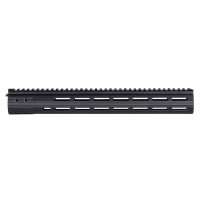
Two fundamental designs dominate the market. Free-floating handguards attach only to the upper receiver, never touching the barrel. This eliminates pressure points that affect accuracy, making free-float designs the standard for precision applications. They typically require barrel nut replacement and specific tools for installation.
Drop-in handguards use the existing delta ring assembly on mil-spec uppers. Installation requires no specialized tools – just standard components most AR owners already have. While they contact the barrel through the delta ring assembly, quality drop-in options still deliver excellent practical accuracy for most applications. The tradeoff is accessory mounting, since many drop-in designs offer limited rail space compared to modern free-float systems.
Choosing AR Handguards for Your Build
Length and Gas System Compatibility
Handguard length must match your barrel and gas system configuration. Carbine-length systems generally accommodate handguards up to about seven inches. Mid-length configurations allow roughly nine to ten inches. Rifle-length gas systems support full-length coverage. The gas block must remain accessible or fully covered depending on your setup – exposed gas blocks under handguards create function and safety issues.
Mounting Standards and Accessory Attachment
M-LOK and KeyMod dominate modern attachment systems, offering lightweight slots for accessories without permanent rails. Traditional Picatinny quad rails provide maximum versatility with rails at 12, 3, 6, and 9 o’clock positions. The tradeoff is weight – full quad rails add substantial mass compared to slotted designs. Many shooters now prefer M-LOK top sections with continuous Picatinny for optics, combining light weight with attachment flexibility.
Material and Construction Quality
Aluminum alloys dominate quality handguards, balancing strength with manageable weight. T6061 aluminum offers excellent durability for most applications. Higher-end options use T7075 aluminum for additional strength with minimal weight penalty. Wall thickness, internal reinforcement design, and heat treatment affect both rigidity and thermal management. Carbon fiber handguards deliver exceptional weight savings but typically cost significantly more.
Barrel Nut Systems and Installation
Proprietary barrel nuts affect both installation complexity and future compatibility. Some systems require specific wrenches and precise timing procedures. Others use standard mil-spec nuts with adapter components. Consider whether you have appropriate tools or access to armorer services. Anti-rotation tabs, timing shims, and indexing systems vary between manufacturers – some install easily, others demand patience and specific technical knowledge.