BG
BG DE
DE Hrvatski
 Čeština
 Dansk
Dansk Nederlands
 Eesti
Eesti Suomi
Suomi Français
 Ελληνικά
 Magyar
 Latviešu
 Lietuvių
 Malti
Malti Norsk bokmål
 Polski
 Română
 Slovenčina
 Slovenščina
 Español
 Svenska
 Italiano
 Português, Portugal
Shop muzzle brakes at No Boring Guns for rifles, precision platforms, and competition builds. We stock recoil compensators and muzzle devices designed to reduce felt recoil and manage muzzle rise across calibers and shooting disciplines.
A quality rifle muzzle brake transforms shooting performance by redirecting propellant gases to counteract recoil forces. This allows faster follow-up shots, reduced shooter fatigue during extended sessions, and improved accuracy by minimizing muzzle movement.
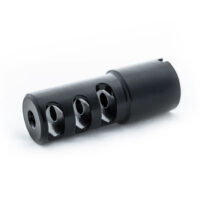
Muzzle brakes redirect expanding gases through precisely angled ports and chambers machined into the device body. Side ports push gases outward and rearward, countering recoil forces as the bullet exits. Top ports or chamber designs control muzzle rise, keeping sights on target during rapid fire. Different port configurations, chamber arrangements, and baffle systems create distinct performance characteristics suited to specific shooting applications.
Choosing the Right Muzzle Brake
Caliber and Thread Compatibility
Thread pitch must match your barrel precisely – common specifications include 1/2×28 for standard .223/5.56 platforms, 5/8×24 for .308 rifles, and various metric threads for European firearms. Bore diameter requires careful attention since insufficient clearance creates dangerous pressure situations while excessive clearance reduces effectiveness. Caliber-specific designs optimize gas flow for particular cartridge pressures and volumes.
Recoil Reduction vs. Concussion
Aggressive multi-port designs deliver maximum recoil reduction but generate significant side blast and concussion for the shooter and nearby participants. This tradeoff becomes critical for competition environments with squad shooting or hunting scenarios with companions nearby. Some designs incorporate forward-biased ports or directional chambers to reduce side blast while maintaining recoil control. Consider your typical shooting environment when evaluating port configurations.
Installation Requirements
Most muzzle brakes require proper timing to align ports correctly relative to the barrel’s orientation. Some designs use crush washers, though precision shims provide more consistent alignment and torque specifications. Self-timing designs incorporate internal mechanisms that allow installation to proper orientation without additional components. Professional installation ensures correct torque, alignment, and thread engagement for safe operation and optimal performance.

POPULAR
NOVENTLY
108.91€