BG
BG DE
DE Hrvatski
 Čeština
 Dansk
Dansk Nederlands
 Eesti
Eesti Suomi
Suomi Français
 Ελληνικά
 Magyar
 Latviešu
 Lietuvių
 Malti
Malti Norsk bokmål
 Polski
 Română
 Slovenčina
 Slovenščina
 Español
 Svenska
 Italiano
 Português, Portugal
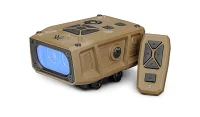
Shop laser rangefinders at No Boring Guns for hunting, precision shooting, and tactical applications. Our inventory includes dedicated rangefinders and integrated systems like thermal scopes with rangefinder capabilities for European shooters.
Accurate distance measurement transforms shooting performance at extended ranges. Laser rangefinders eliminate guesswork when calculating bullet drop, windage adjustments, and holdover points. Whether stalking game across varied terrain or engaging targets beyond 300 meters, precise range data ensures first-round hits.
Laser rangefinders measure distance by emitting infrared beams and calculating return time from target surfaces. Hunting rangefinders typically reach 800-1500 meters on reflective targets, with reduced performance on non-reflective surfaces like vegetation or dark clothing. Premium models feature angle-compensated ranging that adjusts measurements for uphill and downhill shots, critical for mountain hunting and tactical applications.
Choosing Laser Rangefinders
Range and Target Acquisition
Maximum range specifications indicate performance on reflective targets under ideal conditions. Realistically, expect 60-70% of advertised range on natural targets like animals or foliage. Fast target acquisition matters when ranging moving game or tracking targets during competitive shooting. Look for large objective lenses and clear displays that remain visible in bright sunlight.
Ballistic Features
Entry-level hunting rangefinders provide line-of-sight distance only. Mid-tier models add angle compensation, displaying the actual shooting distance rather than direct line measurement. Advanced ballistic rangefinders store multiple rifle profiles with specific ammunition data, calculating exact holdover or turret adjustment recommendations. This functionality proves invaluable beyond 400 meters where trajectory variation increases dramatically.
Build Quality and Optics
Optical quality affects both ranging capability and general observation use. Multi-coated lenses improve light transmission and target identification. Weather-sealed housings with nitrogen purging prevent internal fogging during temperature changes and wet conditions. Compact designs fit into pocket carry, while larger units offer superior optics and extended battery life. Glass quality directly impacts maximum effective ranging distance on low-contrast targets.
Laser Range Finders FAQs
What is a laser rangefinder used for?
Laser rangefinders measure precise distances to targets for accurate shooting at extended ranges. They eliminate estimation errors when calculating bullet drop and windage adjustments beyond 200-300 meters. Advanced models provide angle-compensated distances and ballistic solutions that account for uphill/downhill shooting angles, critical for mountain hunting and precision rifle applications.
How much do laser range finders cost?
Pricing spans from basic distance-only models to sophisticated ballistic computers, with rangefinders like the Vortex 4000 Ballistic costing north of 2000 euros. Entry-level hunting rangefinders provide accurate ranging for recreational shooters learning distance estimation. Mid-tier options add angle compensation and improved optics, while premium units integrate full ballistic calculators, multiple rifle profiles, and superior glass quality for professional applications.
How accurate are laser rangefinders?
Quality laser rangefinders achieve accuracy within plus/minus one meter on most targets out to their effective range limits. Performance depends on target reflectivity, atmospheric conditions, and device quality – darker, non-reflective surfaces reduce maximum ranging capability compared to reflective targets. Premium models maintain accuracy on low-contrast natural targets like animals and vegetation where budget units struggle beyond 400-500 meters.
Are rangefinders worth it for shooting?
Rangefinders become essential once you shoot beyond 300 meters where trajectory variation makes estimation unreliable. They eliminate one major variable in long-range shooting calculations, allowing focus on wind reading and position stability. For hunting, accurate range data ensures ethical shot placement and reduces wounded game, while competition shooters gain speed and confidence with instant distance confirmation across multiple target positions.