BG
BG DE
DE Hrvatski
 Čeština
 Dansk
Dansk Nederlands
 Eesti
Eesti Suomi
Suomi Français
 Ελληνικά
 Magyar
 Latviešu
 Lietuvių
 Malti
Malti Norsk bokmål
 Polski
 Română
 Slovenčina
 Slovenščina
 Español
 Svenska
 Italiano
 Português, Portugal






















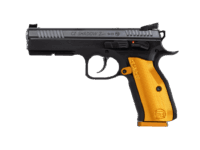
Shop competition pistols at No Boring Guns for IPSC, USPSA, and multi-gun shooting disciplines across Europe. Stock includes race-ready platforms from established manufacturers and specialized competition builders.
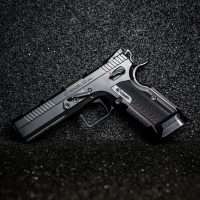
Competition handguns differ fundamentally from defensive or service pistols. Purpose-built race guns prioritize speed, accuracy, and capacity while accepting tradeoffs in weight and concealment. Shooters invest in these platforms to gain measurable advantages in stage times, target transitions, and accuracy under match pressure. The right competition pistol matches your division requirements, shooting style, and performance goals.
Competition Pistol Categories
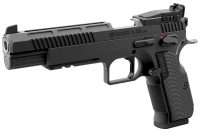
Competition shooting encompasses multiple divisions with distinct equipment requirements. Production and Standard divisions use factory-based pistols with minimal modifications, typically featuring polymer frames and striker-fired actions. Limited and Open divisions permit extensive customization including compensators, optics mounting, and tuned triggers. Open-class race guns represent the pinnacle of competition handgun development, with slide-mounted red dots, aggressive compensators, and hand-fit components throughout.
Major manufacturers like Glock dominate Production divisions with reliable, affordable platforms that accept competition-oriented modifications. Specialized builders including KMR Precision produce purpose-built race guns engineered specifically for high-level competition.
Choosing Competition Pistols
Division Requirements
Your competition division determines equipment specifications. IPSC Production limits modifications and magazine capacity while requiring specific trigger weights and holster configurations. Limited division permits compensators and extended magazines but restricts optic mounting to frame locations. Open division allows virtually unlimited modifications including slide-mounted optics and maximum-capacity magazines. Understanding divisional rules prevents purchasing incompatible equipment and ensures match eligibility.
Trigger Systems
Trigger quality directly impacts accuracy and stage performance. Factory triggers typically break between 2-3 kilograms with noticeable travel and reset characteristics. Competition-grade triggers reduce pull weight while maintaining reliability, featuring crisp breaks and short resets that enable faster follow-up shots. Single-action triggers in steel-framed guns offer lighter pulls than striker-fired systems, though modern competition strikers with aftermarket components approach single-action performance. Match your trigger selection to division requirements and personal preference developed through range experience.
Compensators and Porting
Muzzle devices reduce felt recoil and muzzle rise, enabling faster split times between shots. Compensators redirect propellant gases upward, counteracting muzzle flip during recoil. Barrel porting achieves similar results through holes machined into the barrel itself. Open-division shooters gain significant advantages from aggressive compensators paired with downloaded ammunition optimized for gas port timing. Limited-division rules restrict compensator designs, while Production prohibits them entirely. Consider your competitive goals against the added maintenance requirements and ammunition sensitivity that compensated pistols introduce.