

 BG
BG DE
DE Hrvatski
 Čeština
 Dansk
Dansk Nederlands
 Eesti
Eesti Suomi
Suomi Français
 Ελληνικά
 Magyar
 Latviešu
 Lietuvių
 Malti
Malti Norsk bokmål
 Polski
 Română
 Slovenčina
 Slovenščina
 Español
 Svenska
 Italiano
 Português, Portugal
















Shop monoculars at No Boring Guns, where you’ll find optical and thermal options for hunting, wildlife observation, and tactical scouting. From compact day-use glass to full thermal imaging units, the range covers entry-level buyers through to serious field professionals looking for the best in 2026.
A monocular solves a simple problem: you need magnified vision in a package you’ll actually carry. Unlike a spotting scope, it goes in a jacket pocket. Unlike binoculars, it leaves one hand free. Whether you’re glassing a field edge before a stalk, scanning for birds, or checking heat signatures after dark, there’s a monocular built for the job.
Types of Monoculars Available
The category breaks down into three broad groups, each suited to different conditions and budgets.
Day-use optical monoculars are the classic format – single-tube optics using quality glass and multi-coated lenses to deliver magnified, bright views in daylight. Brands like Vortex offer several models in this space, from compact pocket-friendly options to higher-magnification units with ranging reticles. These are the go-to for general use, monoculars for birding, and lightweight hiking setups where every gram matters.
Night vision monoculars amplify available ambient light to extend observation into low-light and darkness. They depend on some light being present, whether from the moon, stars, or infrared illuminators. Monoculars with night vision are popular with hunters operating at dusk and dawn, and with security professionals. Image quality has improved significantly, though they still perform best when there’s at least minimal ambient light available.
Thermal monoculars detect heat rather than light, which means they work in complete darkness, through fog, and even in light rain. Nocpix is a standout thermal brand in this category – built around professional hunting use cases, with multiple series covering different performance tiers. Thermal units are heavier and more complex than optical monoculars, but they offer capabilities the other types simply cannot match.
What to Consider Before Buying
Magnification Power
Magnification power is the first spec most buyers look at, and it matters – but not in isolation. Higher magnification narrows the field of view and makes the image harder to hold steady without support. For general scouting and monoculars for hunting, magnification in the 8x to 10x range tends to offer the best balance of reach and usability. Go higher and you’ll want a tripod adapter. Thermal monoculars often feature digital zoom on top of their base optical magnification, which adds flexibility but can reduce image clarity at high zoom levels.
Lens Quality and Light Transmission
The objective lens diameter directly affects how much light the optic can gather. Larger lenses mean brighter images, especially in low light – but they also mean more weight and bulk. Multi-coated lenses reduce glare and improve contrast. On thermal units, lens material matters differently: germanium lenses are standard in quality thermal optics because they transmit the infrared wavelengths that thermal sensors read.
Durability and Build
Most quality monoculars are waterproof and fog-resistant, which is essential for outdoor use. Rubber armoring protects against knocks and provides grip in wet conditions. Thermal units tend to have more complex housing requirements given their electronics, so it’s worth checking IP ratings and operating temperature ranges before buying if you’re hunting in harsh conditions.
Monoculars by Application
Hunting: Monoculars for hunting need reliable low-light performance, good magnification, and durability. Thermal options are increasingly the professional choice for dawn, dusk, and night hunting – heat signatures show up clearly regardless of lighting or cover. Optical monoculars remain popular for daytime glassing and quick target identification.
Birding: Monoculars for birding prioritise image sharpness, colour accuracy, and a wide field of view. Close focus distance also matters when you’re watching birds at shorter ranges. Compact optical units with good glass quality and a manageable magnification are typically the right fit here.
Tactical and Security: Monoculars with night vision or thermal capability are standard tools for tactical and security applications. The ability to detect heat signatures or observe in total darkness changes what’s operationally possible. Compact handheld thermal units are widely used for perimeter checks and mobile surveillance.
General Outdoor Use: Day hiking, travel, and wildlife watching don’t demand the same performance as dedicated hunting or tactical use. A compact optical monocular from a brand like Vortex hits the mark – lightweight, pocketable, and capable enough for casual to semi-serious outdoor use without the weight or cost of a thermal unit.
Frequently Asked Questions
What magnification is best for monoculars?
For most hunting and general outdoor use, magnification power in the 8x to 10x range offers the best combination of reach, image stability, and field of view. Going beyond 10x makes the image harder to hold steady without a tripod, which reduces the practical advantage of extra magnification. Thermal monoculars often include digital zoom on top of their base optical magnification, giving you more flexibility in the field without being locked into a single power level.
Are monoculars better than binoculars?
It depends entirely on how you’re using them. Monoculars are significantly lighter and more compact, making them the better choice for active hunters, hikers, and anyone who values one-handed operation and packability. Binoculars provide a more comfortable viewing experience for extended observation from a fixed position, since using both eyes reduces fatigue over time. For thermal use specifically, handheld thermal monoculars are the dominant format precisely because of their portability and fast deployment during active stalking or scanning.
What are the best monoculars for hunting?
The right choice depends on when and how you hunt. For daytime use, a quality optical monocular with good glass and a sensible magnification level covers most needs. For hunters who are active at dawn, dusk, or after dark, thermal monoculars are in a different league entirely – Nocpix is a brand worth serious consideration here, built specifically around hunting use cases with multiple series covering different performance levels, from compact handheld units to high-end thermal options with integrated rangefinders and AI-enhanced imaging. Night vision monoculars are a middle ground option for low-light conditions where thermal is overkill or budget doesn’t stretch that far.
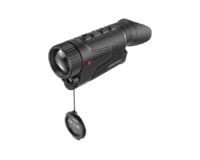
2,098.85€
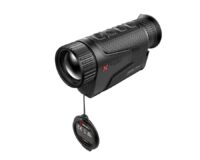
1,915.30€
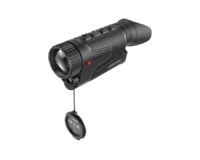
Nocpix Thermal Monocular LUMI L35R LRF
OUT OF STOCK
1,697.49€
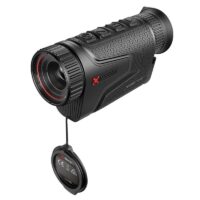
Nocpix Thermal Monocular LUMI L19
OUT OF STOCK
997.02€
Nocpix Thermal Monocular LUMI P13
OUT OF STOCK
552.20€